01
Learning Methodology
At REWTTEERS UNIVERSITY, learning is not a passive experience of consuming information—it is an active, intentional, and transformative journey that develops knowledge, skills, character, leadership, innovation, and lifelong capability.
Our Learning Methodology is designed around the principle that true education occurs when learners move beyond understanding concepts to applying knowledge, solving real-world problems, creating meaningful solutions, collaborating with others, reflecting on their experiences, and ultimately leading positive change.
The REWTTEERS Learning Model is a learner-centered, competency-based, and experience-driven approach that integrates academic excellence with practical application, professional development, entrepreneurship, leadership, and continuous personal growth.
Every course, certificate, diploma, executive program, workshop, and professional development experience follows a structured learning progression that empowers learners to transform education into measurable outcomes and lifelong success.
02
Our Educational Philosophy
We believe that people learn best when they:
Learning should not stop at comprehension.
Learning should produce competence.
Competence should inspire confidence.
Confidence should empower leadership.
Leadership should create lasting impact.
This philosophy forms the foundation of the REWTTEERS Learning Methodology.
- ✓Understand concepts.
- ✓Practice new skills.
- ✓Apply knowledge in real-world situations.
- ✓Collaborate with others.
- ✓Build meaningful projects.
- ✓Reflect on their experiences.
- ✓Lead with confidence and purpose.
03
The REWTTEERS Seven-Stage Learning Model
Every learning experience follows seven interconnected stages:
Learn → Practice → Apply → Collaborate → Build → Reflect → Lead
Each stage intentionally develops intellectual, professional, and personal capabilities that prepare learners for lifelong success.
04
Stage One: Learn
Building Knowledge and Understanding
Every educational journey begins with learning.
Students develop a strong foundation by exploring essential concepts, principles, theories, frameworks, and best practices relevant to their field of study.
Learning experiences may include:
The objective is to establish deep conceptual understanding while encouraging curiosity, critical thinking, and continuous inquiry.
Learners Develop
- ✓Interactive video lessons
- ✓Live lectures
- ✓Reading materials
- ✓Digital textbooks
- ✓Case studies
- ✓Research articles
- ✓Podcasts
- ✓Expert interviews
- ✓Multimedia presentations
- ✓AI-assisted learning
- ✓Self-paced learning modules
- ✓Foundational knowledge
- ✓Subject mastery
- ✓Critical thinking
- ✓Intellectual curiosity
- ✓Analytical skills
05
Stage Two: Practice
Understanding becomes meaningful through practice. Students participate in structured learning activities that reinforce new knowledge through repetition, experimentation, and guided application.
Practice activities include:
Practice enables learners to gain confidence while strengthening professional competence.
Learners Develop
- ✓Practical exercises
- ✓Simulations
- ✓Skills laboratories
- ✓Interactive assignments
- ✓Knowledge checks
- ✓Scenario-based learning
- ✓AI-assisted practice
- ✓Demonstrations
- ✓Guided workshops
- ✓Skill-building challenges
- ✓Practical skills
- ✓Technical competence
- ✓Confidence
- ✓Accuracy
- ✓Professional habits
06
Stage Three: Apply
Education becomes valuable when learners apply what they know to authentic situations.
Students use their knowledge to solve practical problems, make decisions, develop strategies, and create meaningful solutions.
Application activities include:
Application bridges the gap between education and professional practice.
Learners Develop
- ✓Industry projects
- ✓Business case studies
- ✓Consulting assignments
- ✓Research projects
- ✓Community engagement
- ✓Entrepreneurship challenges
- ✓Innovation projects
- ✓Leadership simulations
- ✓Professional presentations
- ✓Workplace scenarios
- ✓Problem-solving
- ✓Decision-making
- ✓Adaptability
- ✓Professional judgment
- ✓Innovation
07
Stage Four: Collaborate
Great ideas emerge through collaboration. Students work with peers, mentors, faculty members, industry experts, and global partners to exchange ideas, solve problems, and develop collective solutions.
Collaboration activities include:
Collaboration develops interpersonal effectiveness while preparing learners for modern workplace environments.
Learners Develop
- ✓Team projects
- ✓Group discussions
- ✓Peer reviews
- ✓Collaborative research
- ✓Virtual teamwork
- ✓International projects
- ✓Innovation labs
- ✓Leadership groups
- ✓Community forums
- ✓Professional networking
- ✓Teamwork
- ✓Communication
- ✓Emotional intelligence
- ✓Cultural awareness
- ✓Leadership
- ✓Relationship building
08
Stage Five: Build
The highest level of learning produces meaningful creation. Students are encouraged to design, build, launch, and showcase projects that demonstrate mastery while creating value for organizations, communities, or industries.
Building activities include:
Learners graduate with tangible evidence of their capabilities.
Learners Develop
- ✓Digital portfolios
- ✓Business plans
- ✓Startup ventures
- ✓Research publications
- ✓Educational resources
- ✓Technology solutions
- ✓Creative projects
- ✓Community initiatives
- ✓Innovation prototypes
- ✓Capstone experiences
- ✓Creativity
- ✓Entrepreneurship
- ✓Innovation
- ✓Professional portfolios
- ✓Confidence
- ✓Value creation
09
Stage Six: Reflect
Growth requires intentional reflection. Students evaluate their experiences, identify strengths, recognize improvement opportunities, and develop strategies for continuous growth.
Reflection activities include:
Reflection transforms experience into wisdom.
Learners Develop
- ✓Learning journals
- ✓Self-assessment
- ✓Professional reflection
- ✓Mentor feedback
- ✓Peer feedback
- ✓Goal reviews
- ✓Competency evaluations
- ✓Personal development planning
- ✓Leadership reflection
- ✓Career planning
- ✓Self-awareness
- ✓Emotional intelligence
- ✓Continuous improvement
- ✓Personal responsibility
- ✓Lifelong learning habits
10
Stage Seven: Lead
Leadership represents the culmination of the learning journey. Students are encouraged to apply their knowledge, skills, character, and experience to influence others positively and create meaningful change.
Leadership opportunities include:
Leadership at REWTTEERS UNIVERSITY is measured not by titles but by influence, integrity, service, and lasting contribution.
Learners Develop
- ✓Mentoring others
- ✓Leading projects
- ✓Community service
- ✓Entrepreneurship
- ✓Executive leadership
- ✓Innovation initiatives
- ✓Research leadership
- ✓Public speaking
- ✓Professional organizations
- ✓Social impact initiatives
- ✓Leadership confidence
- ✓Strategic thinking
- ✓Ethical decision-making
- ✓Service
- ✓Vision
- ✓Influence
11
Integrated Learning Experiences
The REWTTEERS Learning Methodology combines multiple instructional approaches to maximize engagement and knowledge retention.
Learning experiences include:
This blended approach supports learners with different backgrounds, learning preferences, and career goals.
- ✓Self-paced courses
- ✓Live online instruction
- ✓Interactive workshops
- ✓Virtual classrooms
- ✓Case-based learning
- ✓Project-based learning
- ✓Experiential learning
- ✓Competency-based education
- ✓AI-assisted learning
- ✓Mentorship
- ✓Coaching
- ✓Industry engagement
- ✓Research
- ✓Community learning
12
The Role of Artificial Intelligence
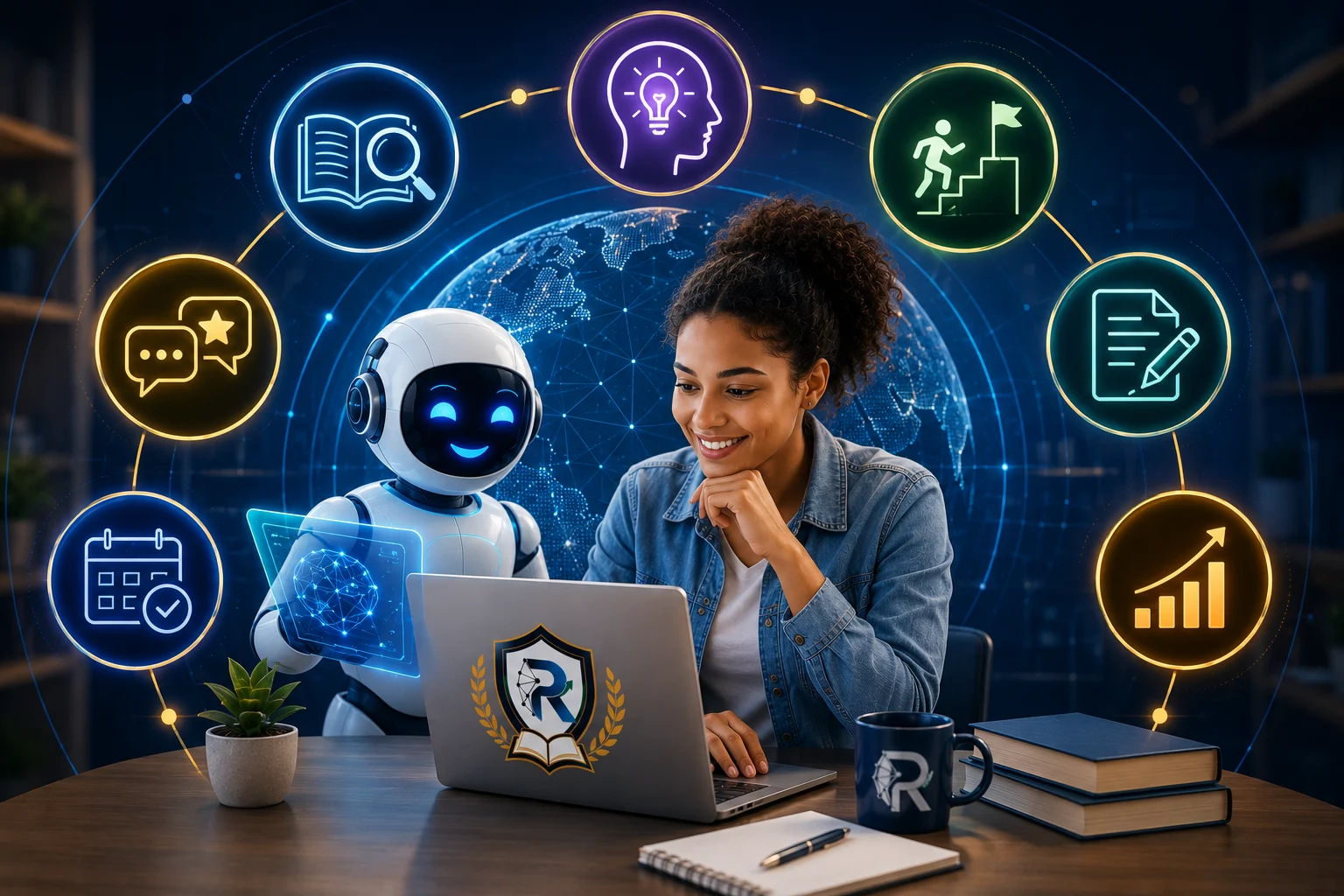
Artificial intelligence enhances every stage of the learning journey by providing personalized support and adaptive learning experiences.
The REWTTEERS AI Learning Assistant helps learners:
AI complements faculty expertise while creating a highly personalized educational experience.
- ✓Clarify concepts
- ✓Practice skills
- ✓Receive personalized feedback
- ✓Build study plans
- ✓Improve writing
- ✓Track progress
- ✓Prepare for assessments
- ✓Discover learning resources
- ✓Identify competency gaps
- ✓Set professional goals
13
Competency-Based Assessment
Progress is measured through demonstrated competence rather than memorization alone.
Assessment methods include:
Learners advance by demonstrating mastery of clearly defined competencies.
- ✓Practical assignments
- ✓Skills demonstrations
- ✓Capstone projects
- ✓Professional portfolios
- ✓Presentations
- ✓Simulations
- ✓Case studies
- ✓Research papers
- ✓Reflective journals
- ✓Team projects
- ✓Innovation challenges
- ✓Leadership experiences
14
Faculty as Facilitators of Learning
Within the REWTTEERS Learning Model, faculty members serve as:
Their role extends beyond teaching content to developing confident, capable, and purpose-driven learners.
- ✓Educators
- ✓Mentors
- ✓Coaches
- ✓Researchers
- ✓Industry advisors
- ✓Leadership facilitators
- ✓Innovation guides
- ✓Career mentors
15
Learning Outcomes
The REWTTEERS Learning Methodology equips every graduate to:
- ✓Think critically and strategically.
- ✓Apply knowledge with confidence.
- ✓Solve real-world problems.
- ✓Collaborate effectively across cultures and disciplines.
- ✓Build innovative solutions that create measurable value.
- ✓Reflect intentionally for continuous growth.
- ✓Lead with integrity, purpose, and vision.
- ✓Adapt to changing industries and emerging technologies.
- ✓Pursue lifelong learning and professional excellence.
- ✓Inspire positive transformation in organizations and communities.
16
The REWTTEERS Learning Promise
At REWTTEERS UNIVERSITY, education is designed to transform lives—not simply transmit information.
Our Learning Methodology ensures that every learner progresses from acquiring knowledge to mastering practical skills, applying expertise, collaborating with others, building meaningful solutions, reflecting on growth, and ultimately leading with excellence and purpose.
We cultivate innovators, entrepreneurs, professionals, researchers, and leaders who improve organizations, strengthen communities, and shape the future.
Through the REWTTEERS Learning Model—Learn. Practice. Apply. Collaborate. Build. Reflect. Lead.—we fulfill our promise to Inspire. Learn. Grow. Earn., transforming education into lifelong leadership, meaningful achievement, and lasting global impact.
- ✓We do not educate students merely to pass examinations.
- ✓We educate them to solve problems.
- ✓We do not prepare learners merely to find employment.
- ✓We prepare them to create opportunities.
- ✓We do not simply teach theories.